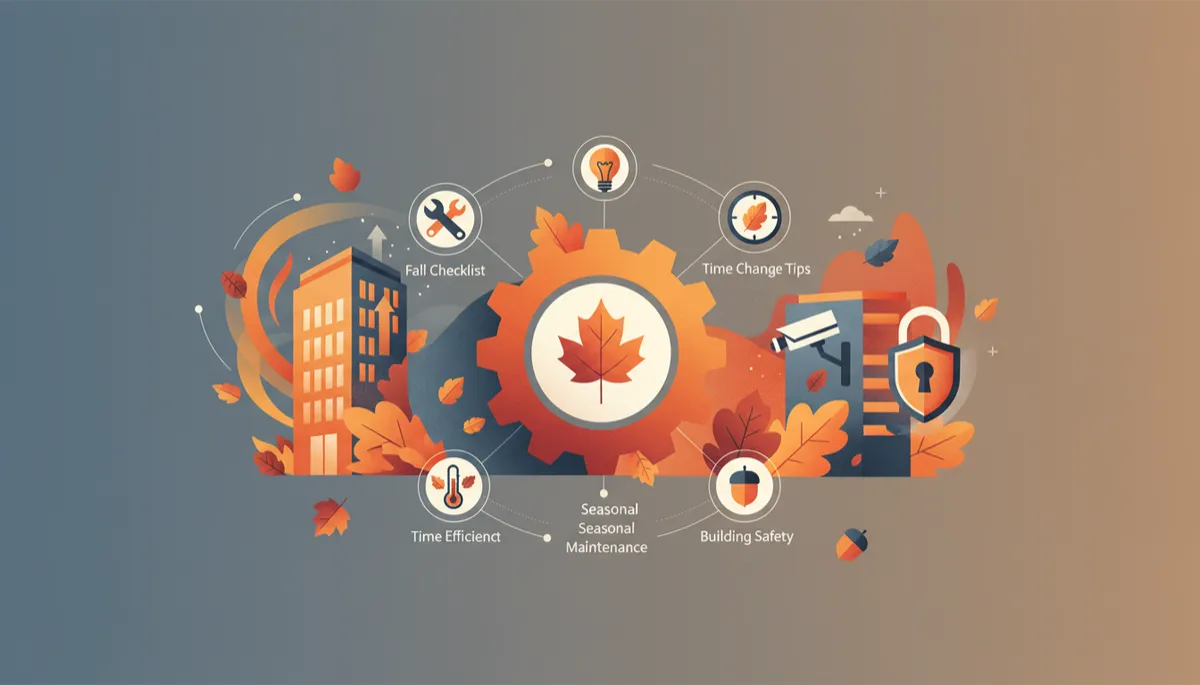
Fall Checklist for Facility Managers
Facility Management, Fall Checklist, Building Safety
The Fall Time Change Checklist for Facility Managers
As clocks “fall back,” smart facility managers see more than a time change— they see an opportunity. The seasonal shift is the perfect trigger to review building operations, tighten safety procedures, and improve energy efficiency before winter conditions arrive.
Why the Fall Time Change Matters for Facility Management
For businesses and agencies, the fall time change is more than a calendar event. It alters how occupants use your spaces, shifts daylight patterns, and exposes vulnerabilities in your building systems. Effective facility management means treating this transition as a scheduled checkpoint for seasonal maintenance, building safety, and energy efficiency.
💡 Time Change Tip: Lock in a recurring fall review date on your CMMS or calendar so inspections never depend on memory.
A Practical Fall Checklist for Facility Managers
Use this structured Fall Checklist to guide your team through the time change period. Tailor it to each site, but keep the core steps consistent across your portfolio.
1. Time Change Tips for Clocks, Controls, and Schedules
Verify all wall clocks, time clocks, badge readers, and meeting room panels so they reflect the new time.
Confirm building automation, HVAC, and lighting control schedules are updated to match new occupancy patterns after dark.
Review security system arming/disarming times to avoid gaps in coverage during earlier nightfall.
💡 Time Change Tip: Document all devices that require manual adjustment so each fall cycle becomes faster and more consistent.
2. Seasonal Maintenance for Critical Building Systems
The shift into cooler months is the ideal moment to complete seasonal maintenance that protects uptime and occupant comfort:
Inspect and service heating equipment, boilers, and heat pumps before demand peaks.
Replace filters, clean coils, and verify thermostats and sensors are calibrated and communicating correctly.
Check roofs, gutters, and downspouts to prevent leaks and ice buildup as temperatures drop.
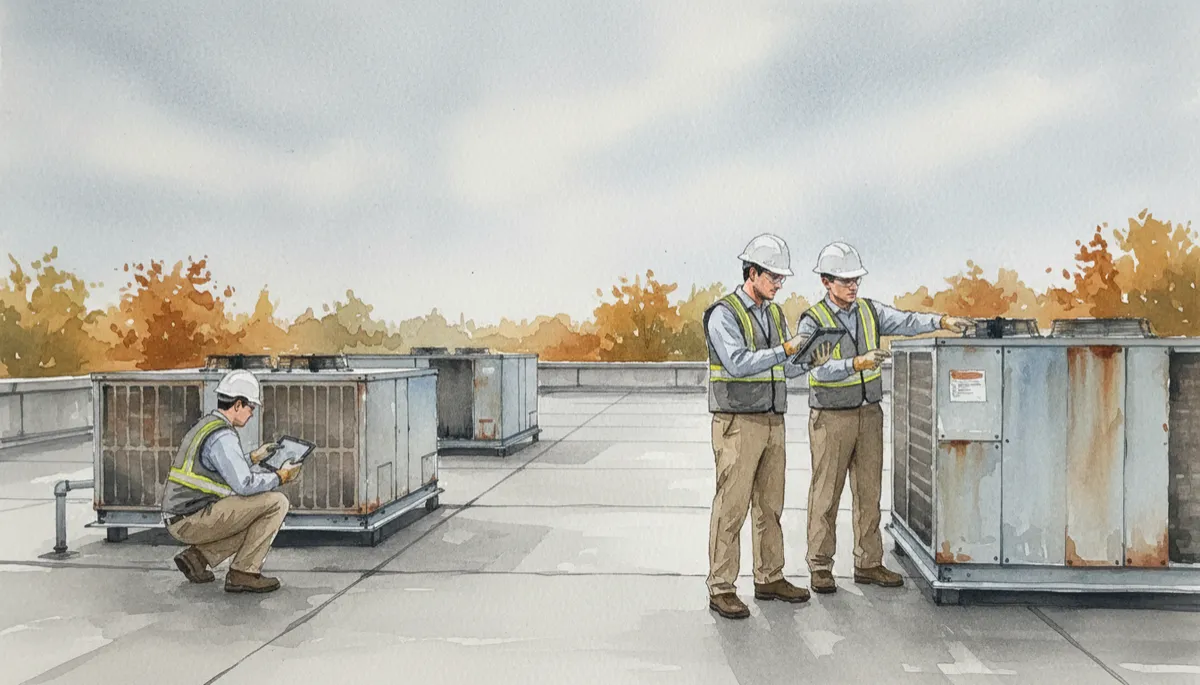
Proactive fall maintenance dramatically reduces winter service calls and emergency repairs.
3. Building Safety in Darker Evenings and Mornings
Earlier sunsets change how people move through your sites. Reviewing building safety at the time change helps you reduce risk for employees, visitors, and the public.
Walk exterior pathways, parking lots, and entrances at dusk to identify dark spots, glare, or trip hazards.
Test emergency lighting, exit signs, and stairwell illumination to ensure they activate properly and meet code requirements.
Confirm that cameras, intercoms, and access control readers provide clear visibility in low-light conditions.
📌 Key Takeaway: A simple dusk walk-through can uncover safety issues that daylight inspections routinely miss.
4. Energy Efficiency Opportunities During the Fall Transition
The fall time change is also a strategic moment to fine-tune energy efficiency. With lighting and heating loads shifting, small adjustments can deliver meaningful savings for businesses and agencies.
Align lighting schedules with actual occupancy and daylight availability to avoid over-illumination.
Review setback temperatures and night-time HVAC strategies to prevent heating unoccupied zones.
Identify quick wins such as sealing drafts around doors and windows or optimizing vestibule operations.
💡 Pro Tip: Use the fall time change to benchmark utility consumption and set winter energy reduction targets.
Turning a Time Change into a Strategic Advantage
When approached deliberately, the fall time shift becomes a built-in reminder to complete a comprehensive Fall Checklist across your properties. By combining smart time change tips with disciplined seasonal maintenance, proactive building safety reviews, and targeted energy efficiency measures, facility managers can protect occupants, control costs, and demonstrate strategic value to leadership.
For businesses and agencies managing multiple sites, standardizing this fall process across your portfolio will reduce risk, support compliance, and keep operations running smoothly—long after the clocks have changed.
